SHERROD CRAFT: TWENTY-FOUR YEARS TAKEN When Judicial Power Demands Accountability
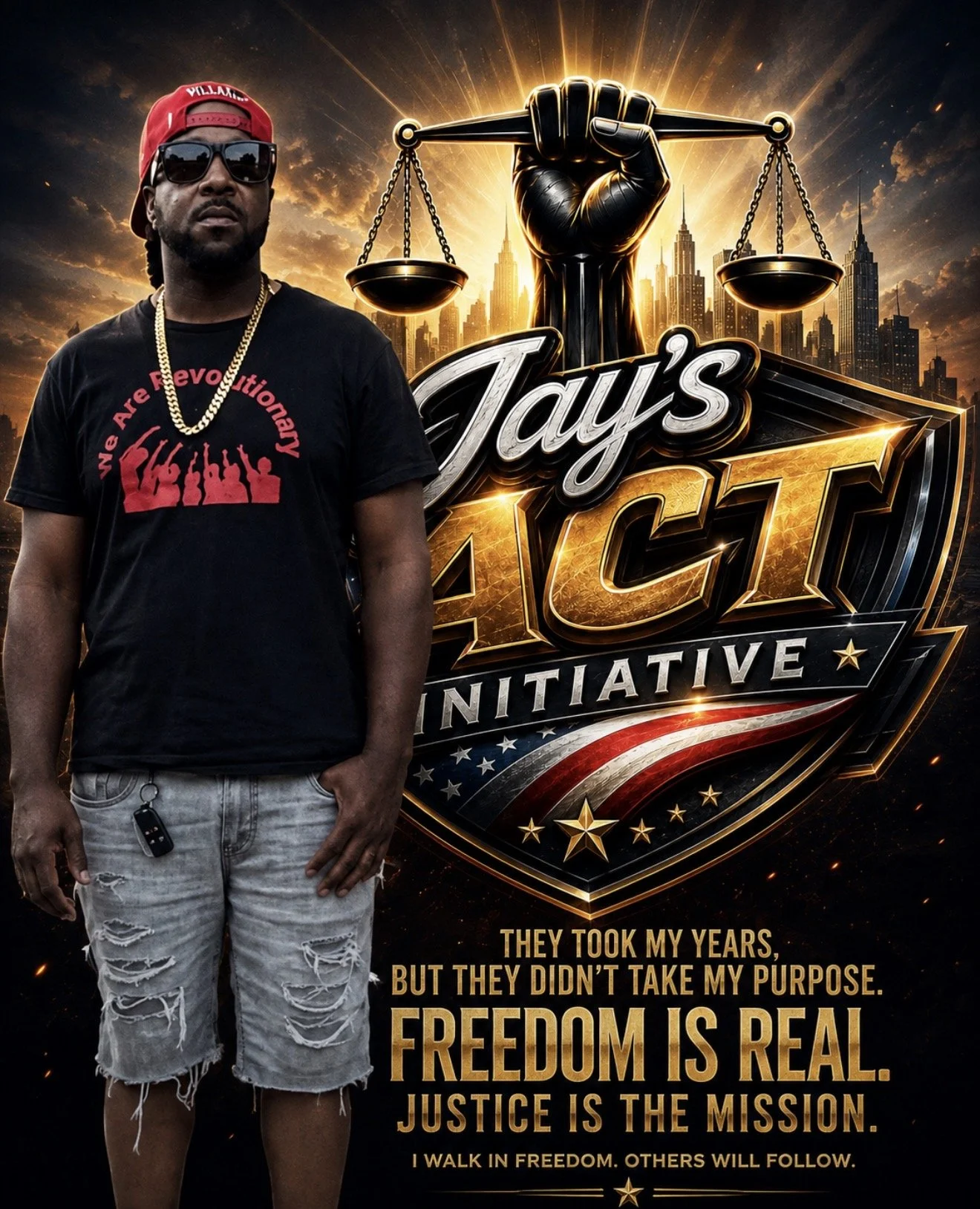
SHERROD CRAFT
There are mistakes that can be corrected with an apology.
There are losses for which money can provide some measure of compensation.
And then there are decisions that consume years of a human life—years no judge, prosecutor, police department, municipality, appellate court, or monetary settlement can ever return.
Sherrod Craft lost more than two decades.
In 2003, Craft was convicted in Albany County of second-degree murder and attempted second-degree murder in connection with the June 3, 2001 shooting that killed teenager Shakira Chambers and wounded Javan Morton. A jury convicted Craft of depraved-indifference murder and attempted murder, and he received consecutive prison terms that amounted to 50 years to life. In 2007, New York's Appellate Division, Third Department affirmed the judgment.
For years, that conviction carried the authority and legitimacy of the State of New York.
Then its foundation collapsed.
On April 23, 2025, Albany County Judge William T. Little vacated Craft's conviction. By then, Craft had spent more than 24 years incarcerated. He was 45 years old, a father of two daughters, and his attorneys had spent more than eight years fighting to clear his name.
Craft's attorneys have stated that there was no physical or forensic evidence connecting him to the shooting. A key prosecution witness, Samuel Frazier, later recanted his testimony and said former Albany Detective Kenneth Wilcox had pressured him to implicate Craft. The Albany County District Attorney's Office ultimately consented to the motion to vacate Craft's conviction.
But court decisions, case numbers and legal terminology cannot adequately explain what twenty-four years actually means.
Sherrod Craft can.
In Sherrod Craft's Own Words
“To endure twenty-four years wrongfully incarcerated in a maximum-security penitentiary is to inhabit a relentless landscape of isolation and survival. Serving an entire bid behind maximum-security walls meant bearing witness to violence of every description—a constant, abrasive reality backdrop to a profoundly lonely existence.
Yet, the heaviest burden was not the institutional environment itself, but the agonizing detachment from the outside world. It was measured in the sharp heartbreak of watching family members walk away from visits, the painful realization of fading friendships that could not withstand the distance, and the devastating absence from one's own children's lives. Missing their daily growth and every milestone and special moment—forced to father from afar—represented the deepest cost of a stolen quarter-century.
Returning home has brought the profound joy of reconnecting with family, rebuilding relationships with children, and embracing the new generation with grandchildren. But coming back has also revealed a devastating continuation of institutional failure. The same system that unjustly took decades away offered no real safety net upon release—failing to deliver the promised reentry programs, housing assistance, or stability measures set in stone to help a wrongfully convicted person transition.
Navigating this chapter has meant pouring energy into vital community work while enduring severe housing instability, at times living out of a car. It is a duality defined by genuine happiness in finally being surrounded by loved ones, contrasted against the relentless, hard-fought daily grind of starting over from scratch.”
— Sherrod Craft, personal statement to THE JAY ACT, August 2026
Those words expose something that legal opinions rarely capture:
Wrongful incarceration does not merely take freedom. It takes life as it is happening.
Twenty-four years means birthdays.
Graduations.
First steps.
First words.
Weddings.
Funerals.
Holidays.
Children becoming adults.
Parents becoming elderly.
Friendships disappearing.
Families learning to live around an empty chair.
And for Craft, according to his own account, it meant the particular agony of trying to remain a father while an institution physically separated him from his children.
Imagine watching your family leave after a prison visit.
They walk toward the parking lot.
You walk back toward a cell.
They return to homes, jobs, schools, birthdays and ordinary life.
You return behind a locked door.
And then you repeat that process for years.
That is the human measurement of incarceration that cannot be expressed by simply writing “24 years” on a page.
You Cannot Vacate Twenty-Four Years
A court can vacate a conviction.
It cannot vacate time.
It cannot order Craft's daughters to become children again.
It cannot restore every birthday he missed.
It cannot reconstruct relationships altered by decades of separation.
It cannot resurrect loved ones who may have died while he was imprisoned.
It cannot return friendships that disappeared.
It cannot place him back into the world of 2001 and permit him to live those years again.
The law has mechanisms for reversing judgments.
Human life does not.
There is no appellate court for lost time.
There is no retrial for a childhood missed.
There is no judicial order capable of returning twenty-four summers, twenty-four winters, twenty-four birthdays or twenty-four years of ordinary human existence.
That is why wrongful incarceration must never be reduced to a legal technicality.
It is an irreversible deprivation of human life.
Freedom Without a Foundation
Craft's account also forces us to confront what happens after the prison gates finally open.
Returning home after decades of incarceration is not the end of the story.
In some respects, it is the beginning of another fight.
According to Craft's personal account, he returned to the joy of his family, children and grandchildren—but also to severe housing instability. He describes periods of living from a vehicle while attempting to rebuild his life and simultaneously devote himself to community work.
Those particular post-release circumstances are presented here as Craft's firsthand account rather than as independently established findings in the published reporting.
But they raise a profound public-policy question:
What does society owe a human being after the justice system has taken decades of his life?
Opening the prison gate is not enough.
A person released after decades of incarceration confronts a society almost unrecognizable from the one he left.
Technology has transformed.
Employment has transformed.
Housing costs have transformed.
Communication has transformed.
Banking, transportation, identification systems and government services have transformed.
The person must learn how to exist in a world that evolved while he was prevented from evolving alongside it.
When the government has participated in taking decades from someone's life under a conviction that is subsequently vacated, meaningful reentry assistance should not be treated as charity.
It should be treated as part of repairing the damage.
And Then Comes the Hardest Question: Who Answers for It?
Sherrod Craft's case demands that we confront something much larger than a single conviction:
Who holds the justice system accountable when the justice system takes the wrong person's freedom?
Judicial independence is indispensable to democracy.
Judges cannot—and should not—be punished simply because a litigant, politician or member of the public dislikes a lawful ruling.
But judicial independence cannot become institutional immunity from examination.
Craft's conviction did not happen outside the judicial system.
It traveled through it.
There was an investigation.
There was a prosecution.
There was a trial.
There was a conviction.
There was a sentence.
There was an appeal.
In 2007, New York's Appellate Division considered Craft's arguments and affirmed the judgment. The appellate opinion shows how the formal machinery of the justice system processed and upheld the conviction at that time.
Nearly two decades later, that murder conviction was vacated.
That should humble every institution entrusted with another human being's liberty.
Because wrongful convictions demonstrate an uncomfortable truth:
A courtroom can look completely legitimate while ultimately producing an unjust result.
There can be a judge.
There can be prosecutors.
There can be defense attorneys.
There can be witnesses.
There can be motions.
There can be transcripts.
There can be appellate review.
There can be an official decision stamped with the authority of the state.
And years later, the conviction can still collapse.
Accountability Does Not Mean Automatically Blaming a Judge
Judicial accountability must be discussed responsibly.
A conviction being vacated years later does not, by itself, prove that the trial judge or appellate judges committed misconduct.
That distinction matters.
Judges ordinarily decide cases based upon the evidence, arguments and law placed before them. New evidence can emerge years later that was unavailable to the original court.
But that does not mean the judiciary should be excluded from institutional examination when catastrophic miscarriages of justice occur.
Accountability is not synonymous with punishment.
Accountability begins with questions.
What evidence was presented?
What evidence was withheld?
Were warning signs overlooked?
Were allegations of coercion adequately investigated?
Were constitutional protections meaningfully enforced?
Did defense counsel have access to information necessary to challenge the prosecution's case?
Were credibility problems known?
Could the appellate process realistically detect what happened?
Did procedural rules prevent courts from reaching potentially meritorious claims?
And when misconduct actually occurred, who knew, when did they know, and what did they do about it?
Those questions must apply to every component of the justice system—police, prosecutors, defense counsel, forensic professionals and, where appropriate, courts.
The Robe Cannot Become a Shield From Legitimate Scrutiny
Judges possess extraordinary power.
With words spoken from a bench, another human being can lose decades of liberty.
A person can walk into prison as a young father and return as a grandfather.
That level of governmental authority demands an equally extraordinary commitment to fairness, accuracy, constitutional protection and transparency.
Doctors can face professional discipline for misconduct.
Lawyers can be sanctioned or disbarred.
Police officers can be investigated.
Prosecutors can face professional discipline.
Public officials can be removed.
There must likewise be meaningful systems capable of addressing actual judicial misconduct when evidence establishes it, while preserving the independence judges require to make difficult and sometimes unpopular decisions.
The two principles are not enemies.
Judicial independence protects justice from politics.
Judicial accountability protects justice from unchecked power.
We need both.
The Evidence That Changed Everything
The circumstances surrounding Craft's vacated conviction make these questions especially important.
According to Craft's attorneys, a key prosecution witness recanted and alleged that Detective Kenneth Wilcox pressured him to incriminate Craft. Craft's legal team has also maintained that there was no physical or forensic evidence linking Craft to the shooting.
In April 2026, Craft filed a federal civil-rights lawsuit against the City of Albany and former detectives. The federal docket identifies the action as arising under 42 U.S.C. § 1983.
Craft's attorneys allege in that litigation that his conviction resulted from serious investigative misconduct, including coerced witness statements, fabricated evidence and failure to disclose exculpatory information. Those allegations are part of ongoing civil litigation and should not be confused with final judicial findings.
That distinction is important because accountability itself must be based upon evidence and due process.
We cannot condemn injustice while abandoning fairness in determining who was responsible for it.
Accountability Must Mean More Than Compensation
Money matters.
A person who loses decades because of a wrongful conviction should have meaningful avenues to pursue compensation.
But no dollar figure can purchase 24 years.
A settlement cannot recreate Craft's daughters' childhoods.
It cannot manufacture the memories he should have had.
It cannot restore the experience of being present.
It cannot erase maximum-security prison.
It cannot undo loneliness.
It cannot eliminate the violence he says he witnessed.
And it cannot remove the psychological imprint of watching family members repeatedly walk away while knowing he could not follow them home.
Compensation may recognize an injustice.
It cannot reverse it.
That is why every overturned wrongful conviction should become an opportunity for institutional learning.
Not merely:
“How much will this cost?”
But:
“How did this happen?”
“Who failed?”
“What safeguard did not work?”
“Could someone have discovered this sooner?”
And most importantly:
“How do we make certain it does not happen to the next Sherrod Craft?”
Sherrod Craft Is Not Merely a Case Number
Sherrod Craft should not become another statistic buried in America's growing history of overturned convictions.
His story should become a demand.
A demand for stronger conviction-integrity review.
A demand for meaningful access to post-conviction evidence.
A demand for transparency when convictions collapse.
A demand for rigorous investigation of credible allegations of police and prosecutorial misconduct.
A demand for courts willing to examine uncomfortable evidence.
A demand for meaningful reentry support for people released after decades.
And a demand that no institution participating in the deprivation of human liberty be considered too powerful to examine.
Albany County District Attorney Lee Kindlon captured an essential principle while discussing Craft's case in 2026: the prosecutor's responsibility is not simply securing convictions; prosecutors must ensure that the convictions they continue to stand behind are just, and credible evidence calling a conviction into question must be taken seriously.
That philosophy should extend throughout the criminal justice system.
Justice is not protecting a conviction because the government once obtained it.
Justice is protecting truth.
Justice is protecting due process.
Justice is protecting constitutional rights.
And above everything else, justice is protecting human liberty.
Sherrod Craft walked into prison as a young man.
More than twenty-four years later, the murder conviction that had kept him imprisoned was vacated.
Today, according to Craft himself, he is experiencing the extraordinary joy of reconnecting with children and grandchildren while simultaneously fighting for the basic stability necessary to rebuild a life.
There is something deeply unsettling about that image:
A man survives more than two decades behind maximum-security walls.
His conviction is eventually vacated.
He walks through the gate.
He embraces his family.
And then he discovers that freedom itself comes with another fight for survival.
We can say his conviction was vacated.
We can say he was released.
We can say the justice system eventually reconsidered his case.
But there is one thing we cannot truthfully say:
We cannot say Sherrod Craft got those twenty-four years back.
He did not.
Twenty-four years cannot be resentenced.
Twenty-four years cannot be remanded.
Twenty-four years cannot be retried.
Twenty-four years cannot be appealed back into existence.
And twenty-four years cannot be returned by an apology, a judicial order or a check.
That is why Sherrod Craft's story must stand for something larger.
When the government possesses the power to take a human being's freedom, every institution exercising that power must also exist within a meaningful system of accountability.
Not because every overturned conviction proves judicial misconduct.
Not because judges should fear making difficult decisions.
But because liberty is too sacred, incarceration is too consequential, and human life is far too short for any institution entrusted with the power to take decades from another human being to exist beyond serious scrutiny.
A justice system should never be measured solely by how efficiently it convicts.
It should be measured by how fiercely it protects the innocent.
How courageously it admits error.
How quickly it corrects injustice.
How transparently it investigates failure.
How compassionately it helps those harmed rebuild.
And how determined it is to ensure that when the machinery of justice fails, another human being does not have to sacrifice twenty-four years of an irreplaceable life before somebody finally listens.
SOURCES & DOCUMENTATION
New York State Law Reporting Bureau — People v. Craft, 36 A.D.3d 1145 (2007), 2007 NY Slip Op 00415. Official appellate decision documenting Craft's Albany County conviction, the underlying charges, sentence and appellate review. Official New York Courts — People v. Craft
Times Union — “‘Put my arms around him’: Albany man's murder conviction vacated,” April 23, 2025. Reporting on the vacatur of Craft's conviction, his release after more than 24 years, his 50-years-to-life sentence, his family and the evidence that led to renewed examination of the conviction. Read the Times Union report
Emery Celli Brinckerhoff Abady Ward & Maazel LLP — “ECBAWM Client's Conviction Vacated After Serving 24 Years in Prison For A Crime He Did Not Commit,” April 24, 2025. Statement from Craft's attorneys regarding his vacated conviction and the recantation of a key prosecution witness. Read Craft's attorneys' announcement
ECBAWM — April 24, 2025 press release concerning Craft's CPL 440.10 proceedings. Provides additional information from Craft's legal team concerning the lack of physical or forensic evidence, the witness recantation and the eight-year effort to overturn the conviction. These descriptions represent the position of Craft and his attorneys. Read the full April 2025 press release
U.S. District Court, Northern District of New York — Craft v. City of Albany et al., No. 1:26-cv-00745. Federal docket documenting Craft's April 20, 2026 civil-rights action under 42 U.S.C. § 1983 against the City of Albany and other defendants. Federal docket information via Justia
Spectrum News 1 — “Albany man pursues wrongful conviction lawsuit against city,” April 21, 2026. Reporting on Craft's federal litigation and his attorneys' allegations concerning fabricated evidence and false statements, as well as Albany County District Attorney Lee Kindlon's comments regarding the obligation to review credible wrongful-conviction claims. Read the Spectrum News report
Emery Celli Brinckerhoff Abady Ward & Maazel LLP — Federal Civil Rights Lawsuit Announcement, April 22, 2026. Craft's attorneys describe allegations in the federal litigation involving coerced witness statements, fabricated evidence and failure to disclose exculpatory information. These remain civil allegations unless and until established through the judicial process. Read the federal lawsuit announcement
Times Union — “Man wrongly convicted of Albany murder files lawsuit against city,” 2026. Additional reporting concerning Craft's federal civil-rights lawsuit, the witness recantation, the absence of physical evidence described by Craft's attorneys and the allegations against former Albany detectives. Read the Times Union lawsuit report
Primary Personal Source
Sherrod Craft — Personal Statement, August 2026.
The first-person account concerning Craft's experience in maximum-security incarceration, witnessing violence, separation from family, watching loved ones leave visits, losing friendships, missing his children's milestones, fathering from prison, reconnecting with children and grandchildren, post-release housing instability, living from a vehicle at times, and his current community work was provided directly by Sherrod Craft for this piece.
Those details are intentionally attributed to Craft as his firsthand testimony and should not be represented as independently verified by the news reports or court records listed above.
His testimony provides what no docket, judicial opinion or newspaper archive can fully preserve: the human cost of twenty-four years that can never be returned.
