The Further: My Journey Through Darkness, and the Light That Refuses to Die
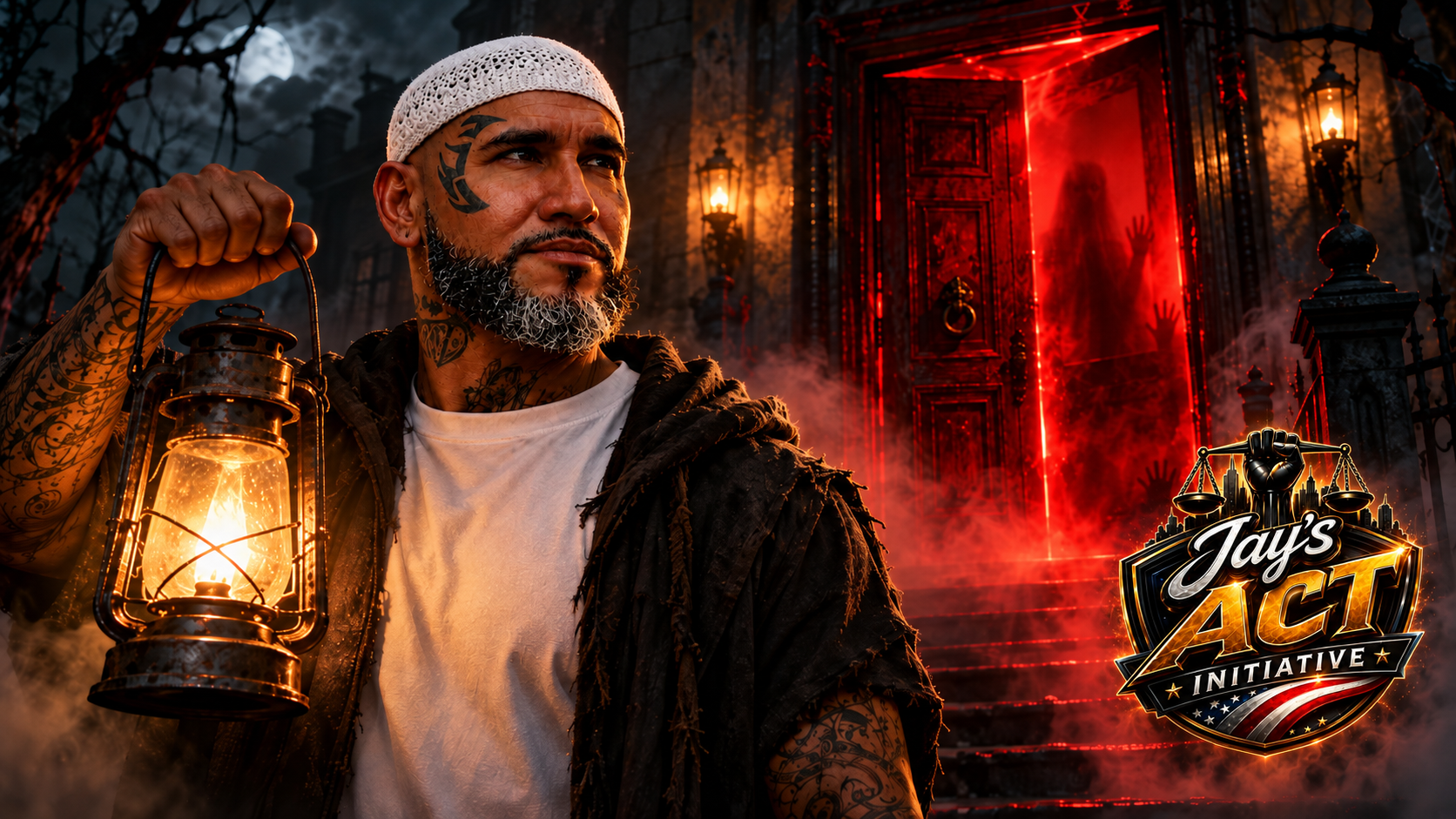
A Lantern in the Further: Finding My Way Home
By Jose “Jay” Rodriguez
There are places where darkness is not merely the absence of light, but the overwhelming presence of trauma, suffering, and forgotten humanity. For me, Green Haven Correctional Facility has become one of those places.
After confronting stage IV cancer, enduring the loss of my eye, and navigating the psychological aftermath of a life-altering surgery, I have come to recognize an unsettling resemblance between my surroundings and The Further from the horror franchise Insidious—a shadowy realm inhabited by lost souls, haunting memories, and forces that thrive in darkness.
But even in a place where suffering echoes through corridors and the walls serve as constant reminders of battles fought in solitude, I refuse to surrender my light.
My lantern is fueled by faith, sustained by hope, and illuminated by the unwavering love of my family, friends, and everyone standing behind The Jay Act.
They may control the doors that confine my body, but they will never possess the power to extinguish the light that guides my soul.
This is more than a reflection on incarceration. It is a testament to survival, the invisible wounds left by trauma, and the extraordinary power of collective love.
Because somewhere beyond these walls, beyond the darkness, and beyond that ominous red door, there is a place I still call home.
And I intend to find my way back.
The Jay Act is our revolution. Together We Rise.

Cancer Took My Eye, But It Could Not Silence Our Revolution
After four years of suffering, uncertainty, and enduring Stage IV cancer, I sat shackled and restrained inside Memorial Sloan Kettering waiting to hear words that would change my life forever. When Dr. David Della Rocca looked at me and said, "You are cancer free," I froze—not from fear, but from overwhelming gratitude. In that sacred moment, I realized that although cancer had altered my face, it had not conquered my spirit.
This victory does not belong to me alone. It belongs to every prayer whispered through tears, every hand that fought on my behalf, every compassionate soul who looked beyond the green uniform and saw a human being worthy of dignity and healing. And while my battle with cancer has ended, our fight against medical neglect and injustice has not.
Silence is not an option.
Complacency is not an option.
This is more than survival. This is testimony. This is purpose.
And together, we will turn pain into policy and suffering into change.

The Million-Dollar Question
As storm clouds gather overhead, one incarcerated man reflects not on his own suffering, but on the suffering of countless others left behind prison walls. Recovering from the consequences of medical neglect, he asks a question that can no longer be ignored: How can there be talk of reform, hope, and rehabilitation while incarcerated human beings continue to suffer and die from preventable medical failures? This powerful reflection challenges leaders to move beyond promises and confront the growing crisis hidden from public view. Behind every prison wall is a human life, and every life deserves dignity, transparency, accountability, and care.

Despite the Challenges of Recovery, the Fight Must Continue
There are moments when courage is not measured by physical strength, but by the decision to keep moving forward when every reason exists to surrender. This reflection from Jose "Jay" Rodriguez comes in the wake of unimaginable loss—the loss of an eye, the daily challenges of recovery, and the enduring reality of navigating a system that too often failed to hear his cries for help.
Yet what emerges from these words is not despair. It is resilience. It is faith. It is the unwavering spirit of a man who has chosen purpose over bitterness and hope over defeat.
Jay reminds us that true strength is not found in never falling; it is found in rising again and again despite pain, despite fear, and despite adversity. His testimony is a powerful reminder that the human spirit can remain unbroken even when the body bears profound scars.
This is not merely a message about survival. It is a declaration that faith, patience, and love remain stronger than suffering. It is a call to every person who has ever felt marginalized, forgotten, or beaten down to remember that greatness often emerges from our darkest moments.
The fight continues. The voices will be heard. And through that struggle, a movement larger than any one person continues to grow.
This is Jay's testimony. This is resilience in its purest form.

The Jay Act: Our Rebellion, Our Revolution
Designed to warehouse human bodies.
Designed to strip people of their names and replace them with numbers.
Designed to convince men and women that they are the worst thing they have ever done.
Designed to break spirits through isolation, deprivation, humiliation, and hopelessness.
Designed to make suffering invisible behind razor wire, concrete walls, and locked gates.
Designed to punish sickness instead of treating it, and to ignore pain until it becomes tragedy.
Designed to separate children from parents, spouses from partners, and families from those they love.
Designed to make society forget that incarcerated people are still human beings deserving of dignity, compassion, and care.
And when people die from violence, neglect, or indifference, the system often responds not with accountability, but with silence.
Not because it is broken.
Because it is functioning exactly as it was designed to function.