A Remarkable Story of Transformation: The Story of Anthony "Ding Ding" Casellas
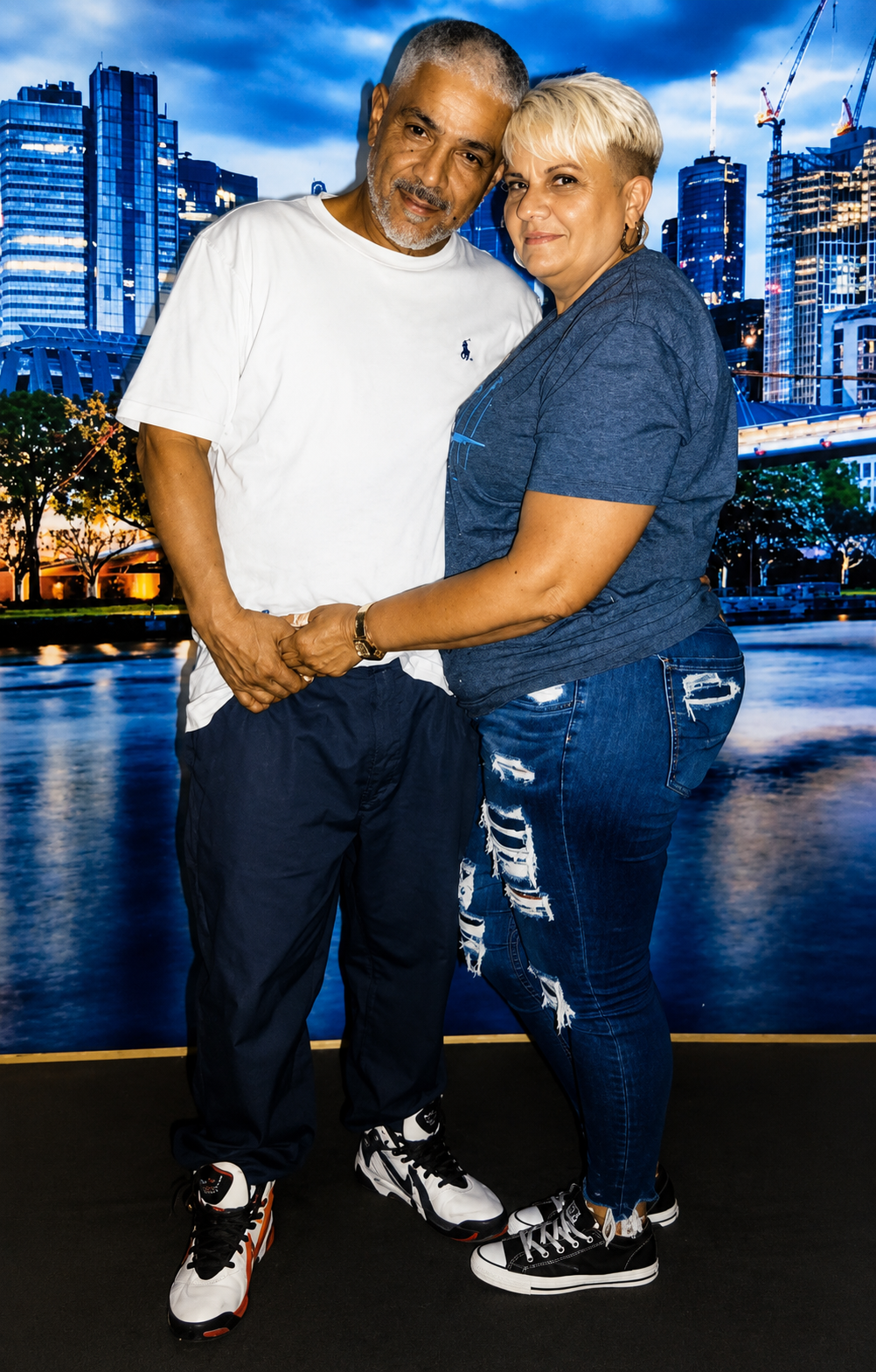
Anthony “Ding Ding” Casellas and Anthony’s beautiful wife Dipsy Delgado
Anthony "Ding Ding" Casellas is serving a sentence of 162 years to life for murder—a conviction that forever altered the course of multiple lives and left immeasurable pain in its wake. Nothing written here seeks to diminish the gravity of that loss or the suffering experienced by the victim's loved ones. Rather, this is a story about a different question: what becomes of a human being after decades of accountability, reflection, and the difficult work of confronting the person they once were. It is not a story that excuses the past, but one that examines whether transformation remains possible even in the shadow of the gravest mistakes.
He entered prison carrying the weight of a crime that could never be undone. He remains accountable for the life that was lost and the pain that followed. But somewhere beyond the headlines, beyond the sentence of 162 years to life, and beyond the labels that so often eclipse humanity, another story quietly began to unfold.
It is the story of a man who discovered that redemption is not found in erasing the past—it is found in refusing to let the past become the final author of the future. Anthony "Ding Ding" Casellas reminds us that while a single decision can alter the course of a lifetime, a lifetime can also be spent choosing compassion over bitterness, wisdom over anger, and purpose over despair.
The measure of a human life is not only found in its darkest chapter, but in the courage to write every chapter that follows with greater integrity than the one before it.
Some wounds bleed.
Others remain hidden beneath the skin, unseen by the world yet carried with astonishing weight.
The most profound scars are rarely stitched by surgeons or concealed beneath bandages. They are etched into memory, carved into silence, and carried in the invisible places where the human spirit wrestles with grief, regret, survival, and hope.
This is the story of one such man.
Not merely a man who survived.
But a man who chose to become.
His name is Anthony "Ding Ding" Casellas.
To some, he is known only by a nickname.
To others, by a prison identification number.
To a system that too often reduces human beings to files, disciplinary records, or convictions, he is another incarcerated individual moving through the machinery of confinement.
But none of those descriptions tell the truth.
Because every human being possesses two biographies.
The one the world records.
And the one only the soul truly knows.
Anthony's second biography is written not in ink, but in endurance.
It is written in every morning he chose to rise after believing there was little reason to.
It is written in every moment he refused to allow bitterness to become his permanent language.
It is written in the quiet decision to heal from wounds that no one else could see.
There are people who believe transformation is a dramatic event—that one day a person simply awakens different.
Life rarely works that way.
Transformation is less like lightning and more like water.
It does not arrive to impress.
It arrives to reshape.
Patiently.
Persistently.
Almost invisibly.
Water does not argue with stone.
It simply continues flowing until even granite begins to yield.
So too does healing.
For years, Anthony carried burdens that language struggles to contain.
The visible hardships of incarceration were only one part of the story.
Far more difficult were the unseen battles.
The disappointments that accumulated quietly.
The moments of abandonment.
The internal wars fought long after the lights dimmed and conversations ended.
There exists a peculiar loneliness in carrying invisible scars.
People often ask how your body is healing.
Few ask how your spirit survived.
They notice when a bone is broken.
Rarely do they recognize when hope has fractured.
Yet it is often the invisible wounds that require the greatest courage to mend.
Some people emerge from suffering determined to repay pain with pain.
Others make an altogether different decision.
They become sanctuary.
Anthony chose sanctuary.
He discovered that redemption is not the denial of one's past.
It is the courageous refusal to allow the past to dictate the future.
He began rebuilding not simply a life—
but a character.
Not simply a reputation—
but a purpose.
Not simply himself—
but the possibility that someone else might believe change is still attainable.
Because remarkable people understand something extraordinary:
The greatest testimony is not spoken.
It is lived.
Every encouraging word offered to another incarcerated man.
Every lesson shared.
Every act of patience.
Every refusal to surrender compassion inside an environment where compassion can feel costly.
These are not small acts.
They are revolutions.
They are declarations that humanity can survive even where hope is routinely tested.
There is an old Japanese art known as kintsugi, where broken pottery is repaired with veins of gold instead of hidden glue.
The fractures are not concealed.
They are illuminated.
The object becomes more valuable because it was broken and lovingly restored.
Perhaps human beings were always meant to heal this way.
Not by pretending our fractures never existed.
But by allowing grace to flow through every crack until what once symbolized brokenness becomes evidence of resilience.
Anthony's invisible scars have become his gold.
They have cultivated empathy where anger could have lived.
Wisdom where resentment could have taken root.
Humility where pride might have flourished.
His pain did not disappear.
It transformed.
And transformed pain possesses an extraordinary power.
It no longer imprisons.
It liberates.
There are countless individuals walking this earth carrying invisible scars.
Veterans returning from war.
Mothers grieving children they never had the chance to raise.
Fathers burdened by mistakes they can never revisit.
Children who learned too early that survival often masquerades as strength.
Men who have spent years believing vulnerability was forbidden.
Women who smile brilliantly while quietly carrying unimaginable sorrow.
We encounter them every day.
Often without ever knowing.
Anthony reminds us that healing is not reserved for the fortunate.
It belongs to the willing.
He reminds us that redemption is not a destination granted to a select few.
It is a daily decision.
A sacred discipline.
A lifelong practice of becoming more compassionate than the pain that attempted to define us.
One day, when people remember Anthony "Ding Ding" Casellas, may they remember more than the chapters written by circumstance.
May they remember the man who refused to let invisible scars become invisible chains.
May they remember someone who proved that dignity can outlive disgrace.
That mercy can outgrow judgment.
That purpose can rise from places where society expected only despair.
Because every prison contains cells.
But not every soul remains imprisoned.
Some quietly become free long before the gates ever open.
Anthony's greatest transformation was never simply surviving hardship.
It was becoming the kind of man whose healing reminds others that their own is still possible.
For the strongest people are not those who never break.
They are those who gather every shattered piece of themselves, hold them to the light, and discover that even brokenness can become a window through which hope enters the world.
And perhaps that is the truest measure of a life.
Not how many scars we carry.
But how many people discover the courage to heal because we chose to carry ours with grace.
