What I Have Witnessed: A Reflection on the Modern Prison System
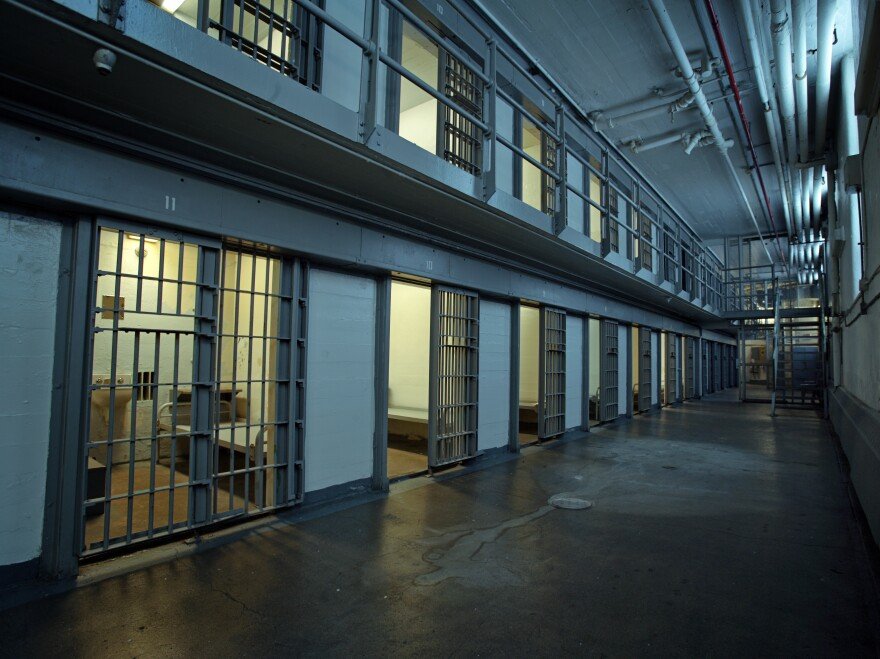
When most people think about prison, they imagine punishment. They imagine concrete walls, steel doors, and individuals serving sentences imposed by a court of law. What they often fail to imagine is everything that exists beyond those walls—the mothers who cry themselves to sleep, the children who celebrate birthdays through glass, the spouses who drive hundreds of miles for a two-hour visit, and the human beings whose suffering frequently goes unseen because it occurs in places the public rarely enters.
Over the past several months, I have spent countless hours speaking with incarcerated individuals, visiting correctional facilities, communicating with families, reviewing records, and advocating for those who believe their voices have been forgotten. What I have witnessed has forever altered my understanding of incarceration in America.
I have learned that imprisonment extends far beyond the deprivation of liberty. For many, it becomes an experience marked by uncertainty, fear, delayed medical treatment, deteriorating mental health, fractured family relationships, and a profound sense of invisibility.
Perhaps the greatest misconception about prison is that every hardship experienced behind the walls is simply "part of the sentence." It is not.
A sentence imposed by a judge is the loss of freedom—not the loss of humanity.
Yet I have encountered countless stories where individuals describe waiting weeks or months for medical evaluations despite persistent pain. I have spoken with families who struggle to obtain information when a loved one is hospitalized. I have read letters describing chronic illnesses, untreated injuries, deteriorating eyesight, significant weight loss, and prolonged uncertainty regarding necessary medical care.
Whether every allegation is ultimately substantiated is a matter for appropriate investigation. What cannot be ignored, however, is the recurring consistency of these accounts. When the same themes emerge from individuals housed in different facilities who have never met one another, thoughtful inquiry becomes essential.
I have also witnessed the emotional consequences of incarceration that statistics rarely capture.
I have watched mothers carry the unbearable burden of trying to remain strong for incarcerated sons while privately fearing they may never see them healthy again.
I have spoken with fathers desperate to maintain relationships with children growing older through photographs and monitored phone calls.
I have met wives who have devoted decades to visiting their husbands every weekend, sacrificing finances, careers, and personal aspirations simply to preserve a family bond.
These families are not serving criminal sentences, yet they often endure many of incarceration's collateral consequences.
One of the most profound lessons I have learned is that correctional systems affect everyone inside their reach.
Correction officers frequently work mandatory overtime under extraordinarily stressful conditions. Medical professionals often serve populations with complex healthcare needs. Mental health clinicians carry enormous caseloads. Administrators face competing operational demands. Meanwhile, incarcerated individuals navigate an environment where every aspect of daily life—from meals and medication to movement and communication—is controlled by institutional processes.
When staffing shortages, inadequate resources, ineffective oversight, or poor leadership occur, the consequences ripple outward, affecting every person within the institution regardless of their role.
This reality demands thoughtful reform rather than simplistic blame.
Another truth that has become impossible for me to ignore is the power of hope.
Despite extraordinary adversity, I have encountered incarcerated men who mentor younger individuals, pursue higher education, write poetry, earn college degrees, participate in restorative justice initiatives, create artwork, strengthen their faith, and dedicate themselves to becoming better fathers, husbands, sons, and members of society.
These individuals remind me daily that human beings are capable of remarkable transformation.
Yet transformation requires opportunity.
Hope cannot flourish where dignity is consistently diminished.
Rehabilitation cannot succeed where individuals believe they have been forgotten.
Accountability and compassion are not opposing principles. They are complementary necessities.
A correctional system should be capable of maintaining public safety while preserving human dignity. It should be capable of enforcing discipline while ensuring constitutional protections. It should recognize that punishment ordered by the courts does not include unnecessary suffering caused by preventable neglect, delayed care, or systemic failures.
Through my work, I have come to believe that transparency is one of the most powerful forms of accountability.
Independent oversight strengthens institutions.
Accurate reporting protects both staff and incarcerated individuals.
Timely medical care preserves life.
Family engagement promotes stability.
Professional training reduces conflict.
Leadership establishes culture.
These are not partisan ideas. They are foundational principles of effective public service.
Perhaps what has affected me most profoundly is realizing how invisible so many people become once prison doors close behind them.
Society often speaks about incarcerated individuals as though they are defined exclusively by the worst decision they have ever made. Yet I have come to know people who are artists, scholars, mentors, entrepreneurs, fathers, grandfathers, veterans, students, caregivers, and leaders—individuals whose humanity cannot be reduced to a conviction or a DIN number.
Every letter I receive reminds me that every person has a story.
Every family I meet reminds me that incarceration reaches far beyond prison walls.
Every visit reinforces that dignity remains essential, regardless of circumstance.
This work has taught me that justice is not measured solely by convictions or sentences. Justice is measured by how faithfully we uphold the humanity of every individual, especially when doing so is unpopular or inconvenient.
The true measure of a society is not found in how it treats those with power, privilege, or influence.
It is revealed in how it treats those who have the least.
Until every incarcerated individual can expect timely medical care, meaningful accountability, safe living conditions, access to rehabilitation, and the dignity inherent to every human life, our work remains unfinished.
I did not choose this mission because it was easy.
I chose it because once you witness suffering that could be prevented, silence is no longer an acceptable response.
The walls of a prison may conceal what happens inside from the public eye, but they should never conceal our collective conscience.
Justice demands more than incarceration.
It demands humanity.
